

INDIAN HUMAN HAIR COMPANY
Premium Indian Human Hair Manufacturers & Global Exporters.
The best colour match in the shop can still look different once your extensions are installed. Your own hair might turn slightly wavy after a wash, while the extensions dry straight. Or the colour might look right, but the change in thickness gives away where your hair ends. A natural-looking blend comes down to how the two sections sit together through a normal day.
Start with your usual routine. Think about where you part your hair, how often you tie it back, and whether you let it air-dry. Those details help you choose raw Indian hair extensions that suit the styles you actually wear.
Wash and air-dry your hair as you normally would. Focus on the sections that will sit over or next to the extensions. The hair around your temples may have a different pattern from the hair at the crown. If you plan to wear a side part, check the section that will fall across the front. That’s where the two textures will be visible together.
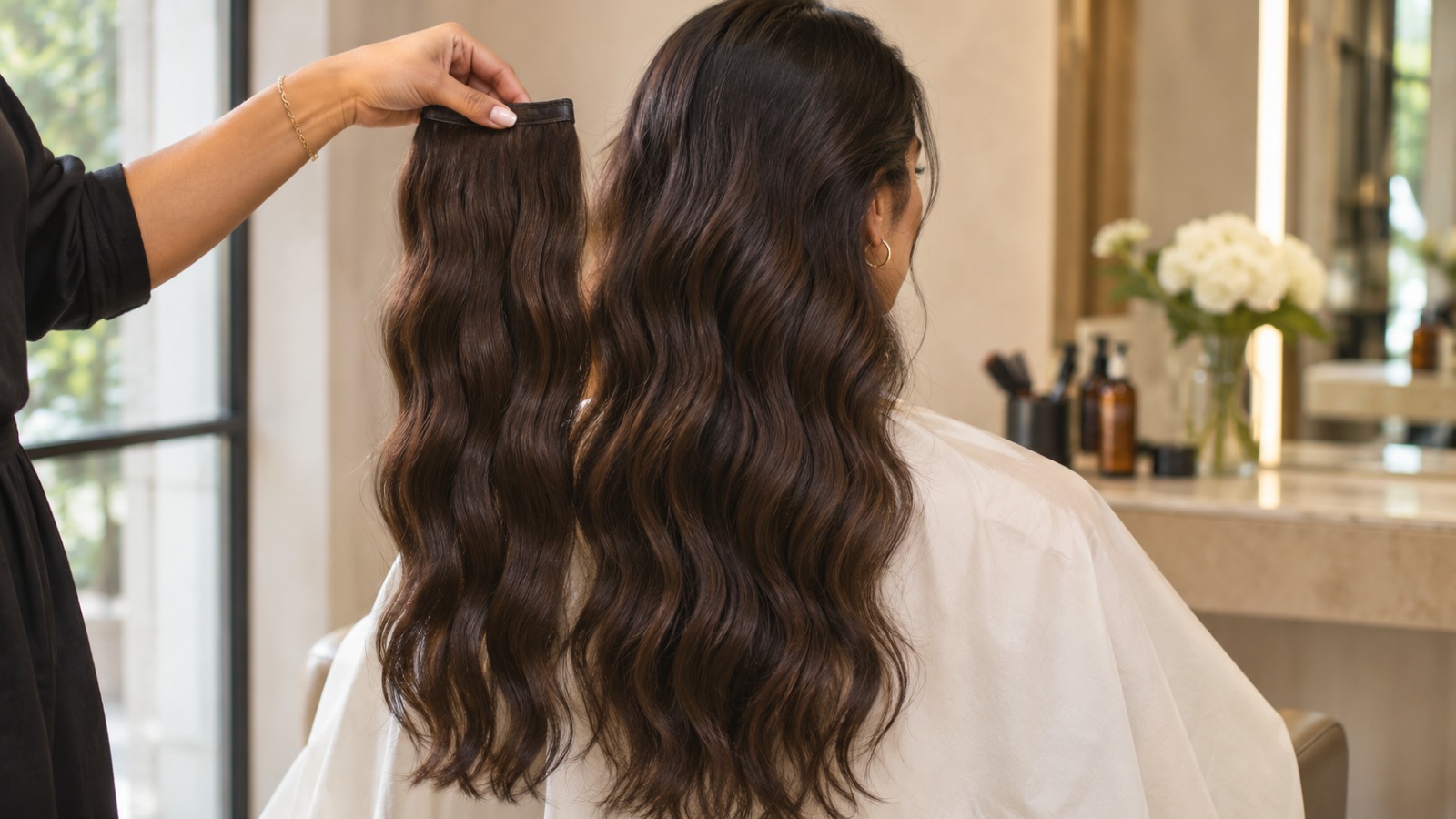
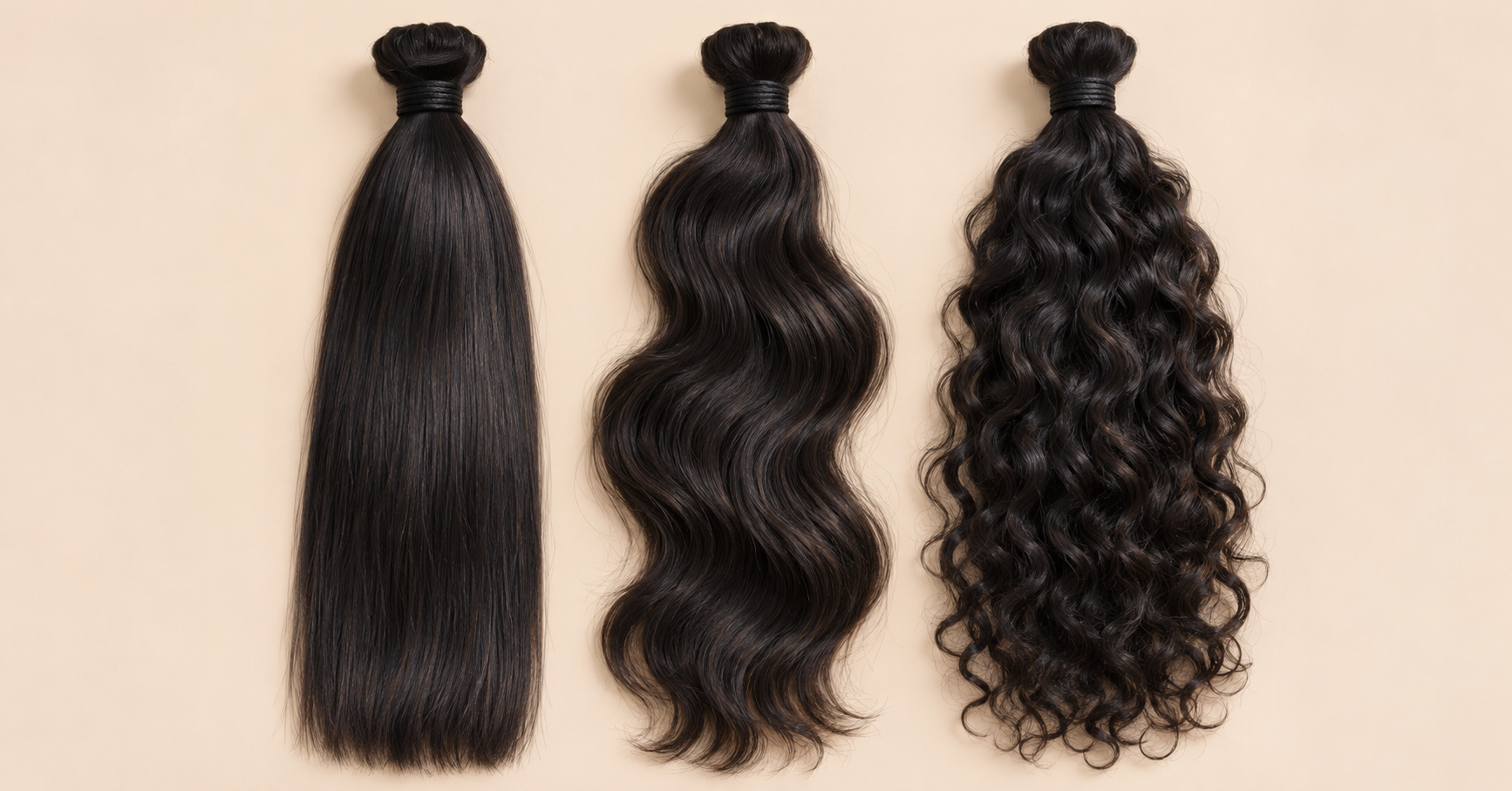
Ask to see the extension bundle in its washed, air-dried state. With wavy hair, compare where the wave starts and how wide it is. With curly hair, look at the curl size and how much the length draws up as it dries. For straight hair, compare the movement at the ends. A bundle with a gentle bend can be a closer match for hair that turns under naturally around the shoulders.
Check the colour near a window or outdoors in indirect daylight. Compare the bundle with the sections of your hair it will sit against. If your ends are lighter than your roots, matching only the roots can create a visible colour change where the two lengths meet. Pull a section of your hair over the bundle to see how they look together.
Pay attention to undertone as well as depth. Two bundles labelled dark brown can look quite different side by side if one has a warm cast and the other looks cooler. If you’re ordering online, send a clear daylight photo that shows your hair from roots to ends. Include a second photo of the side where you usually wear your part.
Decide where you want the hair to fall when dry. A longer bundle can give you the length you want, but the transition will be more visible if your own hair ends in a blunt line. For example, if your hair is cut into a chin-length bob and you want extensions that reach your mid-back, ask your stylist how they’ll soften the area around your jaw and shoulders. Face-framing layers can help carry the shape of the shorter hair into the longer lengths.
Fullness matters as much as length. If your own hair is fine around the temples, thick sections placed close to the front can be difficult to cover. Ask your stylist where they’ll concentrate the volume. You may prefer a fuller shape through the back and ends, with lighter sections near the face. Bring a reference photo showing the profile and back of the style so you can agree on the shape before installation.
Tell your stylist how you wear your hair most often. A middle part, a deep side part, and a low ponytail each expose different areas. Planning your part before installation helps your stylist decide where to place the extensions and how much of your own hair will sit over them.
If you’re getting a sew-in with leave-out, check whether the exposed hair settles into a similar pattern with your usual routine. You can test this before installation by holding an air-dried bundle beside that section. If you prefer a closure, compare its texture and density with the bundles. Ask to see the closure parted in the direction you’ll wear it, since the hair around the part needs to fall naturally into the surrounding lengths.
Check the finished look from the front, sides, and back before leaving the salon. The front view shows how the hair frames your face, while the side view makes it easier to see where your own ends meet the extensions. Move your part or tie your hair back if you plan to wear it that way. If something catches your eye while the hair is moving, point out exactly where the transition shows.
For a wavy finish, try taking small sections that include both your own hair and the extensions and styling them together. For curls, lightly dampen and shape the sections around the face, then let them dry before judging the blend. If you wear the hair straight, check how the ends fall over your shoulders. A small trim can soften a visible line when the colour and texture already match.
Notice which part of the style changes first. If the hair around your face loses definition overnight, refreshing those few sections may be enough. If your lengths feel weighed down, check how much product you’re applying and where it collects. A lighter application around the part and hairline can help those sections sit more naturally.
After washing, detangle gently from the ends upward. Follow the care instructions for your installation and dry the attachment areas thoroughly. Recheck the blend after a wash at home. Seeing how the hair dries with your own products and routine will help you decide whether you need a small styling adjustment or a follow-up trim.
Yes. The result depends on where your own hair ends, how much coverage you have around the attachment areas, and the length you want. Show your stylist your natural haircut and a reference for the finished look before you order. They can assess where the transition will be most visible.
For a blended length, start with the areas where your own hair overlaps the extensions. If you’re adding a closure or choosing hair for a style with a visible part, compare the colour around the roots too. Photos that show both areas make it easier to discuss the match.
Before you order, have three things ready. Take a daylight photo of your hair, note where you want the extensions to fall when dry, and choose a reference image for your everyday style. Share those details when enquiring about raw Indian hair extensions with Indian Human Hair Company so you can compare textures, shades, and lengths with a specific finished look in mind.